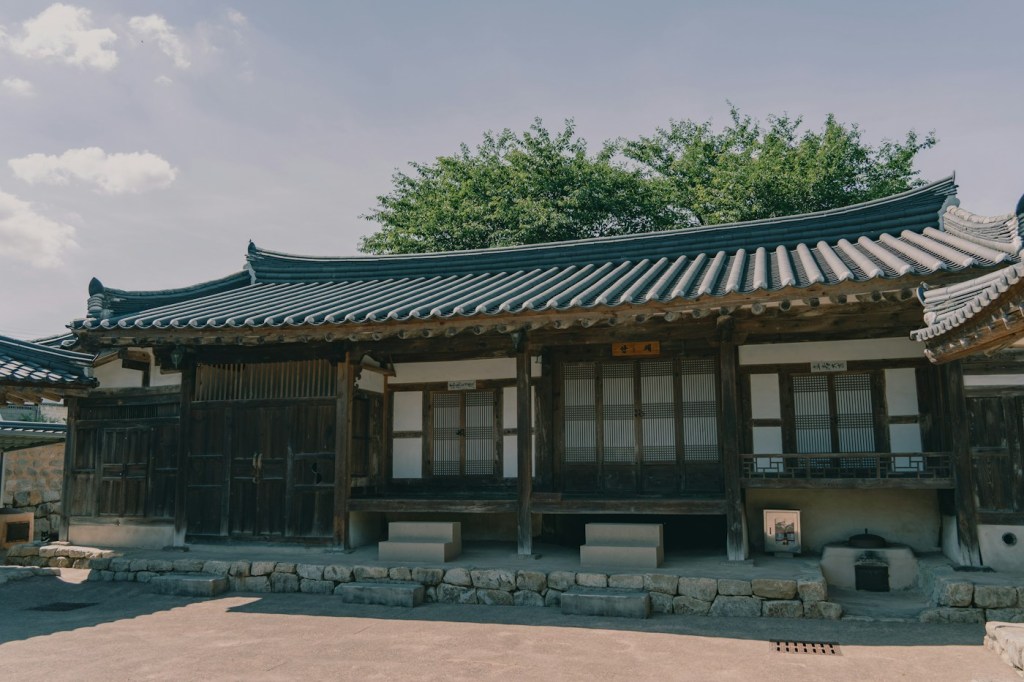
A tiled roof makes a lovely booking photograph. It tells you very little about how you will sleep. Choose a hanok stay when spending time in the house is part of the trip; choose the accommodation with the clearest practical fit when sleep, access and a busy itinerary come first. That may be a conventional hotel—or a hanok with the facilities you need.
A hanok is a traditional Korean house, but “hanok stay” does not describe one standard room. Korea Tourism Organization notes that accommodations range from traditional properties to contemporary reinterpretations. Many use floor bedding; some provide beds and modern conveniences. KTO’s hanok accommodation guide recommends checking facilities before reserving.
Start with the bed, not the roof
Open the listing for the exact room you would book. A property’s photo gallery may mix several room types. Look for a photograph of the sleeping arrangement with the bedding laid out, rather than relying on a picture of an empty, beautifully styled room.
If you want a raised bed, ask for one explicitly. “Bedding provided” does not answer whether you will sleep on the floor. If getting up from floor level is difficult for anyone in your group, resolve that before considering the courtyard or breakfast.
Modern comfort and hanok architecture are not mutually exclusive. For example, Rakkojae’s Anbang room page lists two single beds, heated flooring and a private bathroom. This is a room-specific example, not a promise about every hanok—or a review based on a personal stay.
Trace the route from bed to bathroom
“Private bathroom” is useful information, but ask where it is. Is it directly inside your room, reached through a shared hallway, or accessed across an outdoor space? A floor plan can answer a question that a close-up of a sink cannot.
Then check the route from the entrance to your room. Ask about steps, thresholds and luggage access if those matter to you. “Traditional” is not a reliable accessibility description, and “hotel” does not automatically mean a step-free route. Request details for your particular booking.
Decide what you are actually renting
A room, an annex and an entire house are different purchases. Check which spaces are exclusive to your group and which are shared. A courtyard appearing in the gallery does not necessarily belong to you for the evening.
Even one accommodation brand can operate across multiple buildings. Seoul Stay’s Rakkojae listing describes a village-hotel arrangement spread through the neighborhood. Confirm your room’s entrance and check-in location rather than navigating only to the brand name.
For privacy, ask concrete questions: Does another guest room share a wall? Is there a quiet-hours policy? Where can guests sit together after dinner? Do not assume either complete silence or poor sound insulation from a photograph of wooden doors.
Match the stay to your arrival day
Imagine arriving after a long flight with two suitcases. Your useful questions are now about check-in, bag storage and finding the entrance—not whether the room looks good in soft morning light. Confirm late-arrival arrangements directly before paying for a stay that depends on them.
For winter, ask how room heating is controlled and whether any necessary trips between spaces go outdoors. Our winter packing guide helps with clothing for those transitions. Warm flooring alone does not tell you the temperature of every part of a building.
Send one message before booking
You can copy this and adapt it to your needs:
“Hello, I am considering [exact room name] for [dates] for [number of guests]. Does this room have raised beds or floor bedding? Is the bathroom inside the room? Which areas are shared? Are there steps between the entrance and the room? Can we check in at [time], and where should we bring our luggage?”
Keep the reply with your reservation details. Compare the cancellation terms and total for your own dates, rather than a headline “from” price. A specific answer from the property is more useful than another general list of beautiful hanoks.
Make space to enjoy the house
If your itinerary leaves you out from breakfast until bedtime, consider whether you will actually enjoy the feature you are paying for. One unhurried hanok night followed by a hotel near your next activity is an option, provided the extra move is worth the packing and travel time.
For a short trip, staying in one place may be simpler. You can still explore Korean architecture during a palace visit. Choose the accommodation that fits your nights, then plan what you want to discover during the day.
Sources checked November 27, 2026. Room features and booking conditions can change; confirm the exact room with the operator. Photo: seongjin Kim / Unsplash, used under the Unsplash License. The image illustrates hanok architecture and does not depict a verified room or property recommended here.

